Oct 23, 2026Inside Morejoyous
How to Develop a Custom Plush Toy: From Concept to Production
A clear walkthrough of custom plush development - from sketch and materials to sampling, safety and mass production - based on how we run projects at Morejoyous.
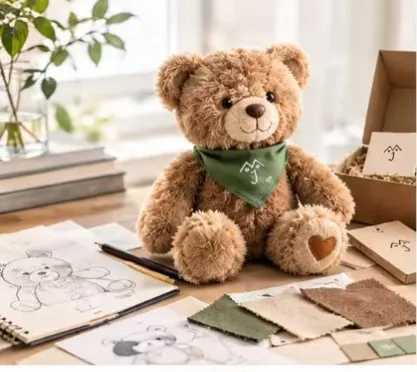
A custom plush toy usually starts as something small - a mascot sketch, a brand character, an idea for a gift that feels personal. Turning that into a product people can hold takes a structured process. Here is how a plush project moves from concept to production, and what to prepare at each stage.
1. Start with the character, not the product
The strongest plush projects begin with a clear character brief: proportions, expression, color palette and the one detail that makes it recognizable. Reference images help, but a simple sketch with notes is enough to start a conversation with a manufacturer. At this stage, decide the approximate size range too - a 15 cm collectible and a 40 cm gift plush are engineered differently.
2. Materials and construction choices
Fabric choice changes everything: short-pile velvet reads crisp and modern, longer pile feels soft and premium, and recycled fabrics tell a sustainability story. Discuss filling firmness, embroidered versus printed eyes, and any weighted or posable elements early - each choice affects cost, safety and the feel of the final piece.
3. Sampling is where the design becomes real
The first sample rarely gets approved unchanged, and that is normal. Check proportions from photos and in person, feel the fabric, and look at the stitching quality up close. Give feedback in one consolidated round - clear, prioritized comments keep the project moving and control sampling costs.
4. Safety and compliance before mass production
Especially for plush aimed at children or sold in regulated markets, confirm the applicable safety standards and testing requirements before mass production. Embedded eyes, small parts and filling materials all have rules. A manufacturer who raises these points unprompted is a good sign.
5. Mass production and quality control
Once the sample is approved, production moves through cutting, sewing, filling, assembly and final inspection. Ask what the in-line and final quality control checks cover, and agree on how defects are handled. Consistency across thousands of pieces is what separates a good sample from a good product.
Thinking about a plush project?
Browse our plush and toy work
, or tell us about your character
- we will come back with materials, sizing options and a realistic timeline.